Retail shows why physical AI needs more than better models. A supermarket is constantly changing: products are moved, shelves are restocked, shifts change hands, and much of the store’s working knowledge lives in people’s heads, scattered notes, cameras, inventory systems, and daily routines.
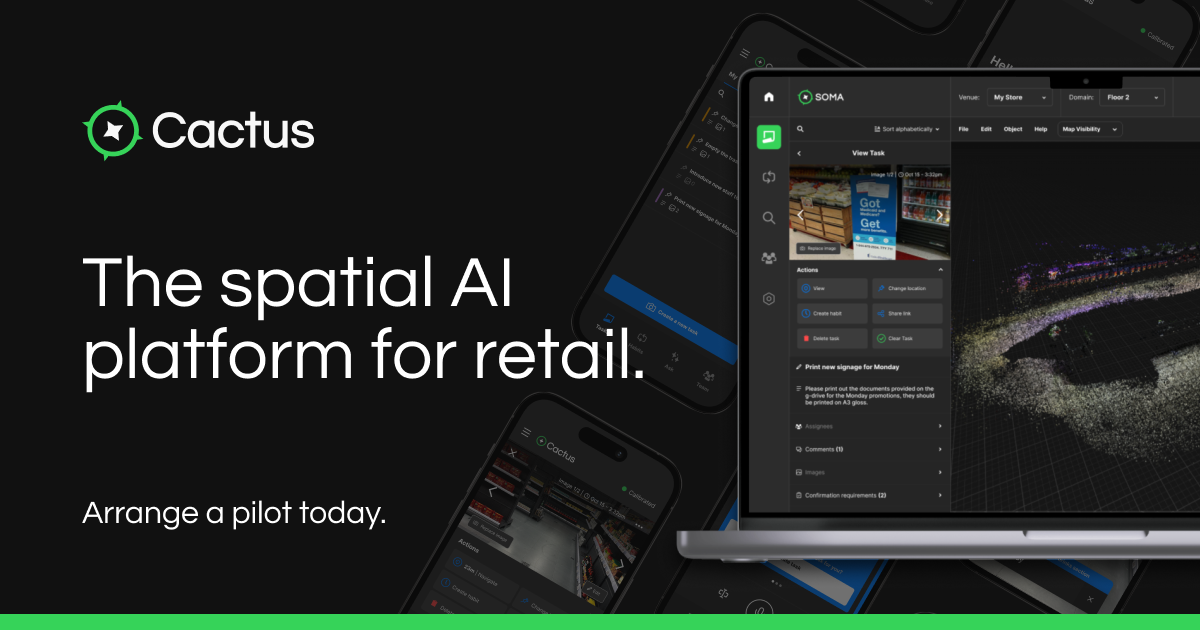
Cactus, built by Auki, gives that messy physical environment a spatial layer. It uses spatial computing, augmented reality, and AI to connect products, tasks, shelves, staff workflows, and store data to real locations on the retail floor.
That matters because many store operations still depend on people knowing where something is, what changed, and who handled it last. With Cactus, staff can receive tasks tied to a specific place, with photos, descriptions, and spatial guidance showing exactly where the work needs to happen.
Auki’s case study with Stora COOP Visby, a Swedish supermarket with more than 5,000 square meters of sales floor and over 24,000 SKUs, shows the basic value of this approach. Cactus helped improve task completion, reduce friction between shifts, and remove the need for a recurring daily handover meeting. The pilot also reported productivity gains among staff members with cognitive impairments, pointing to a broader benefit: spatial interfaces can make complex operational work easier to follow.
For Intercognitive, Cactus is interesting because it treats the store as infrastructure for AI. Before robots, agents, cameras, and human teams can coordinate in supermarkets, warehouses, hospitals, airports, or factories, they need a shared understanding of where things are, what state they are in, and what needs to be done next.
Cactus starts with retail, but the pattern is broader. By giving physical spaces a usable spatial layer, Auki is helping build the kind of real-world interface that embodied AI will need to navigate, assist, automate, and coordinate with people and machines.